Crispy Gnocchi al Pesto

I love Italy with every ounce of my being. If I cannot be cocooned in its boundless warmth soon, I’m certain my heart will burst. Of course, when you voluntarily leave your career to switch directions, working as an unpaid intern and low-paid writer – whilst living off savings, it’s slightly more difficult to jet set in a fashion to which I am accustomed. Spoiled brat sob story aside, I find it nearly impossible to pick a favorite region of Italy: all are different, but yet so similar, warm, and so…Italian. Rome exudes passion. Tuscany envelops you in il bel far niente (the beauty of doing nothing). The magnificence of northern lake country, with the perfectly mirrored Julian Alps spanning from lake to sky, confirms the existence of God. Venice sighs palpable heaviness shrouded in achingly beautiful, neglectful melancholy, while simultaneously igniting resound perseverance. The Italian coast combines Rome’s passion, Tuscany’s il bel far niente and the Julian Alps’ tremendous beauty with nostalgic childhood glee and blue seas for splashing.

I arrived on my première Italian holiday via train from southern France. My general destination was Cinque Terre on the Italian Riviera.  Cinque Terre – whose name means ‘five earths,’ is the epitome of Italian simplicity. Set against a backdrop of sea melding with earth in perfect harmony, the panorama is a seamless procession of blue sea to purple, pink and yellow houses, to green mountainside dotted with lemon groves, ending with a mirrored blue-hued sky. The day I pulled into the Riomaggiore train station was the day that I fell in love. How could I not? I’d finally witnessed a tangible sensation of the word ‘majestic’ and I never want to let it go.

On the train, I met a boy (oh stop with your dirty mind…he was like my little brother and this is a PG love story). We got on well and decided to bum around together for a while – hey, it’s cheaper and more entertaining. Then we met a two-guy-one-girl trio, canceled our respective sleeping arrangements and set off with recently acquired flagons of wine in search of a communal house. (I repeat, this is a PG story but do stay tuned for the Rome segment…). The wine, purchased at the train station, was some of the best I had tasted in my staggering 21 years of vino-sity experience. God, I love Italy. We found a little white house nearly hidden by latticed purple flowers. Two stories, one bathroom with a shower over the toilet and three beds. We were home. We handed our money over, threw our backpacks down on whatever shut-eye vessel crossed our respective path first, changed into slightly less trainified clothes and ventured on towards the night. Our journey – one meandering through tunneled cobble streets sandwiched between the Mediterranean on the horizon and lemon-studded, terraced cliff sides – led us to an unassuming seaside café. We acquired a couple new friends on the walk and all sat down to a table that ALREADY HAD DECANTERS OF WINE ON IT. I repeat, I love Italy. You can’t help but love a place that serves wine like it’s bread…alongside fresh bread and pressed olive oil. If you can, you kick puppies.

In addition to a small selection of delicious antipasti, there were two main options. Americanos likely just rolled their eyes at the lack of selection, but simplicity is the pervasive theme in Italian cooking. It’s always quality versus quantity here.

I was utterly ill-prepared for my first meal in Italy. I had ordered gnocchi al pesto. As many potato variations as this half-limey girl has eaten over the years, I’d never had the pleasure of an introduction to gnocchi. Sacrilege, this is. When the waiter flourished bowls and bowls filled with what I would soon refer to as ‘Heaven’, I sat, staring at my food – ravenously – but with unexpected, involuntary restraint.  It was simply too beautiful to devour without appreciation. It’s a unique restraint achievable only before a truly glorious meal. Something clicked. Food is meant to satisfy your heart and soul, not be a utilitarian endeavor. It should bring you health, gratitude, satiation and joy. 21 years spent as a picky eater and Italy changed me in one hour – I finally got ‘it.’ Eventually, wine-induced hunger wins out, you fervently thank the food gods – and maybe God too – for the morsels that will soon grace your mouth. Then you dig the heck in. I put one piece on a fork, lifted it to my mouth and ate my first gnocchi dotted with pesto.

My heart will never be the same. The gnocchi was perfectly light, fluffy and airy with enough substance and chew to make it as satisfying of oxytocin. To this day, the pesto that I had in Cinque Terre cannot be beat. It’s not possible to make better pesto – don’t bother trying. Ligurian pesto is the Dyson of pesto. I’m convinced they ground up leprechauns to make their pesto so brilliantly green. To be cliché – it makes the Emerald City look shabby. That meal marked a dramatic turning point in my culinary experience. Specifically, it was the impetus for the culinary passion that would eventually launch this blog. It was the meal that made me want to be a chef, and more importantly, made me realize that maintaining ingredients’ intergrity is paramount.

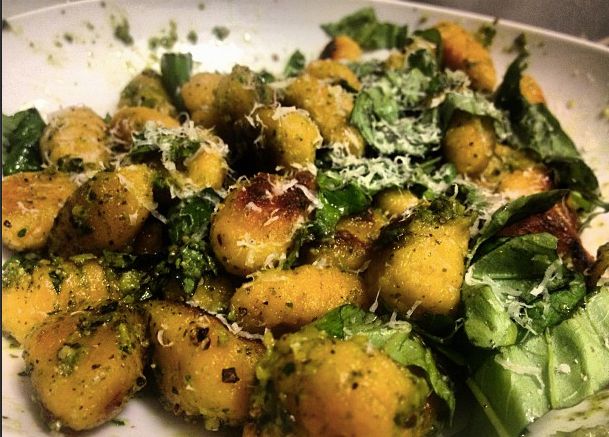
Fast forward ten years and I appear to have culitvated a habit of cooking Italian foods to alleviate some of the heartache I feel from being stuck on this side of the pond (my fourth and most recent visit was in 2009). I have been making Bolognese and pomodoro and zucchini blossoms and this crispy gnocchi like crazy for months now. I’m not entirely sure what made me throw the gnocchi into the frying pan one night. I remember having vague recollection of seeing a crispy version of a regional gnocchi in Cooking with Italian Grandmothers; but really, I prefer the textural contrast of crispy gnocchi with a soft, pillowy inside. Plus, the cast-iron was sitting there all lonely and idle. This non-Paleo sanctioned dish of glory comes together in about five minutes and there are boundless variations you can make. Five minutes assumes that you are using previously made gnocchi that have been frozen – you can use a trusted store bought version (when I don’t have homemade gnocchi in the freezer, I use fresh, store made sweet potato gnocchi from Whole Foods). You can throw in whatever veggies, herbs or protein that you have on hand or leave them out completely. I have made crispy gnocchi in a Tikka Masala sauce before – further proving its versatility.

Versatility aside, my absolute favorite way to prepare this gnocchi is with pesto (Central Market’s pesto is my fave). Usually, I throw in peas and zucchini and basil and toss with shaved pecorino. The following recipe is a vegetarian, green, crispy gnocchi dish that will please everyone.

Crispy Gnocchi al Pesto

Serves 4
Crispy Gnocchi

One package of favorite Gnocchi (suggested Sweet Potato Gnocchi)

One-half cup favorite pesto (suggested Central Market basil pesto), plus more if desired

Two Cups frozen or fresh peas, optional

One Large zucchini, quarter into quarter-inch sections

One-third cup shaved or grated Pecorino Romano

Eight to 10 basil leaves, julienned

One tablespoon olive oil

Salt and Pepper to Taste

Heat salted water, bringing to a boil. While you are waiting for the water to boil, sear the zucchini in a bit of olive oil over a medium high heat (salting lightly) for about three minutes. Once water boils, prepare gnocchi according to instructions – generally this will take no longer than two minutes and the gnocchi will float to the top of the pot. You will also add your frozen peas to the boiling water with the gnocchi. Strain the gnocchi and peas and add to the zucchini pan. Sear the gnocchi until crispy on both sides, taking care not to let it sit too long or it will begin to break. Stir in pesto and turn off the heat. Top with Pecornio Romano and basil and cracked black pepper to taste. Buon Appetito!
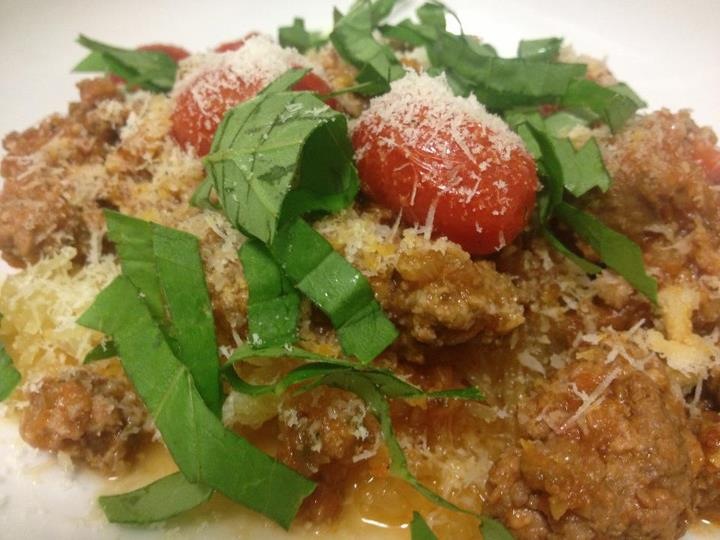
Meat Sauce

Taste buds are a funny thing. To say that I was a picky eater during my formative years is a colossal understatement. I subsisted mainly on cereal and PB&H sandwiches (honey girl all the way – to this day I do not touch jelly). Additional food groups, consumed during my youth were: meat and potatoes (English dad), tamales and popcorn (Venezuelan mom) and massive quantities of pasta (swimmer). As an early-college student I lived off of pretty pasta, cereal, PB&H, Totino’s pizza rolls, Taco Bell (a fact which is possibly one of the greatest regrets of my life to date) and Chick-fil-a. The list of foods that I would not eat was as long as the Monday after the Superbowl until my mid-twenties. On that list: any tomato-based sauce.

I never ate tomato sauce. EVER. I ordered pizza sans sauce. I pitched fits, reusing to eat anything that I even thought included tomato sauce (this lead to many full-blown tantrums over lasagna that I refused to eat even out of politeness at friends of my parents). In all fairness, my tomato sauce aversion was not irrational picky-ness. When I was 11, I got the flu after spaghetti night and threw up red sauce for three days (all over white carpet much to my mother’s dismay). From that day forth,  the sight of tomato sauce sickened me. Until the past year. I started small, eating my pizza with a light layer of tomato sauce, dipping my Rocket Pockets in Meaty Porcini Marinara and eating copious amounts of tomato soup. But recently, I have been on a full blown tomato-based sauce kick. I have experimented with Pomodoro sauce, but my biggest craving (and it is a damn strong one) has been for meat sauce. So strong this craving has been that I made meat sauce four times in five weeks (and hoarded every batch). This intense craving is [thankfully] not pregnancy craving-related, so I have only by taste buds to blame – however bewildered that makes me (and anyone who has known me longer than a year or two).

I have altered the versions a couple times and each one has been sensational. I personally like my veg to be a little less processed because I like to bite into a carrot every now and then, but feel free to process the heck out of the veggies to make the sauce more silken. I added miso paste to two batches to up the umami factor with very tasty results. Between the umami-packed miso and the Parmesan cheese rind, which lends a unique depth of flavor that cannot be emulated, the meat sauce has that awesome “Je ne sais quoi” quality that coaxes you to have bite after bite. Whether that is a good or bad thing is up to you (I do know that I have put on some pounds that are directly correlated to my increased sausage intake). Feel free to include miso and rinds if you have them on hand, but the meat sauce will be just as spectacular in their absence. Brief side note, you can now buy Parmesan cheese rinds at HEB.

In an effort to cut calories and ingest something of nutritional value, I typically eat my meat sauce with spaghetti squash versus pasta. Feel free to use fresh or dried pasta, squash, polenta or baked potatoes as your meat sauce vessel. I actually ate meat sauce soup on a least 10 different occasions. Don’t judge – I  love my meat.

 Meat Sauce 

Serves 4-6 (or one if you are me)

meat sauce

One medium yellow onion

One and one-half large carrots, peeled and cut into one-inch pieces

One celery stalk, cut into one-inch pieces

Ten garlic cloves

One 28-ounce can of whole peeled tomatoes

One pint Cherry Tomatoes, divided

One-Fourth cup Olive Oil

Kosher Salt and Freshly Ground Black Pepper To taste

Crushed Red Pepper, to taste

One-Half Cup Flat Leaf Parsley

Two Tablespoons Fresh Oregano

One pound hot Italian Pork Sausage (bulk or removed from casings)

One pound ground beef

One tablespoon tomato paste (plus a squeeze or two more)

One scant tablespoon Miso Paste (mellow) Optional

One Parmesan Rind (optional)

Two cups water (or beef stock)

One spaghetti squash, halved, seasoned and roasted

Ten Basil Leaves, Julienned

Three-fourths cup Pecorino Romano

In a large food processor, pulse onion, garlic, celery, carrot, oregano, and parsley and pulse until finely ground.  Transfer to a small bowl and reserve. Using the food processor, puree the tomatoes (juices included) until smooth. Heat oil in a large dutch oven (or other heavy pot) and add sausage and cook until browned (about four minutes). Add beef seasoned with salt, pepper and Italian seasoning (latter being optional) and brown until no longer pink. Transfer meat to a plate using a slotted spoon and reserve. Add reserved veggie mix to the pan, season with salt, and cook for about eight minutes (stir often). Combine tomato paste with one cup of water (or stock) in a small bowl and add to the pan, scraping the bottom bits. Reduce heat and simmer until liquid is nearly evaporated. Add tomato puree, crushed red pepper, half of the cherry tomatoes, one [additional] cup water – or stock – and the browned meat to the pan and bring to a boil. Upon achieving a boil, immediately reduce heat to a simmer. Add more water as necessary to ensure that the meat remains nearly submerged the entire cooking time.

Once the meat sauce has simmered for two to three hours, add the cheese rind and miso paste if using. Check for salt and pepper content and adjust as necessary throughout the cooking process. Simmer for an additional two to three hours and remove from heat. Roast remaining cherry tomatoes with olive oil, salt and pepper whilst the squash is roasting. Serve with roasted spaghetti squash (or other meat sauce vessel of choosing), topped with Pecorino Romano and Basil.

Stacked Caprese

I am a person who is generally at a loss for anything failing to fit neatly into my interpretation of “common sense.” The irony abounds considering I have only slightly more common sense than Paris Hilton the majority of the time. Caprese salad, while wonderful, has always put me at a loss for two reasons. First, I feel like stacking the ingredients versus laying them out in a row on a beautiful, yet flat, plate complicates the eating process and degrades the integrity and flavor of the ingredients. In order to get all the delicious ingredients on your fork, you are required to push your food around and it is just more work and it destroys the “eye appeal” of the dish. This problem is accentuated by the American style of eating – us English eaters just mush everything onto the back of our forks anyway. Second, the addition of a couple julienned basil strips does not a salad make. Salad, under andiland guidelines, is defined by some combination of vegetables being present on the plate. Tomato is a fruit; mozzarella is cheese; basil is an herb. The combination is not a “salad” (likewise, I do not believe that cut fruit mixed together in a large bowl is fruit “salad” – it is fruit people) and the dish does not belong in the “salad” section of a menu.

To address these offenses, I introduce a “common sense” approach to a classic appetizer – the Stacked Caprese.  I am not saying a stacked version does not exist (I just have never seen it so fail to believe that it does, in fact, exist).

An extra twist on this classic is roasted tomatoes. As much as I love raw summer tomatoes, there is something about roasting them that my renders my palette extra juicy. I also used burrata which is a delectably creamy mozzarella-esque buffalo cheese (the center is in fact cream filled). Here is a bit more on burrata’s qualities (warining: you will most certainly drool, so try to read in solitude or with another cheese lover who can empathize). Between the creamy cheese, which is rendered even more slightly melty (yes that is a word in andiland) and gooey when layered between the hot tomatoes, and the small nuggets of roasted garlic, your mouth will scream “take me to pleasure town.”

Stacked Caprese APPETIZER (aka not salad)

Serves 4

caprese

  • Two On-the-Vine Summer Tomatoes
  • One to two garlic cloves finely mined
  • Burrata cheese
  • Fresh Basil, julienned
  • Moudlen finishing salt
  • Fresh Ground Black Pepper
  • Good quality Olive Oil
  • Good Quality Balsamic Vinegar (sub pre-made Balsamic Syrup if you have it on hand)

Preheat oven to 375 degrees. Cut the tomatoes into semi-thick rounds (a half to a whole centimeter), seed, and lay flat on a foiled baking dish. Drizzle with minced garlic and olive oil and season well with kosher salt and pepper. Roast until slightly caramelized (and nicely roasted), about 30 minutes and remove. Give the tomatoes a slight sprinkle of the finishing salt (taste first to ensure the salt content will not be too high). Slice the cheese thinly (less than a half centimeter) and reserve. Gently begin stacking the roasted tomato, cheese, tomato, cheese, then tomato. I love fresh basil so I add a ton, but adjust to your preferences and add the julienned basil to the plate (both atop the stack and around the plate). Grind the pepper over the plate. Lastly, add a drop or two of the balsamic vinegar (or syrup) to the plate. You add it directly to the stack (or even each layer), or dot over the plate and stack. Decide according to your preference for vinegar, but the acid is crucial to the dish.

Southerwestern Salmon Salad

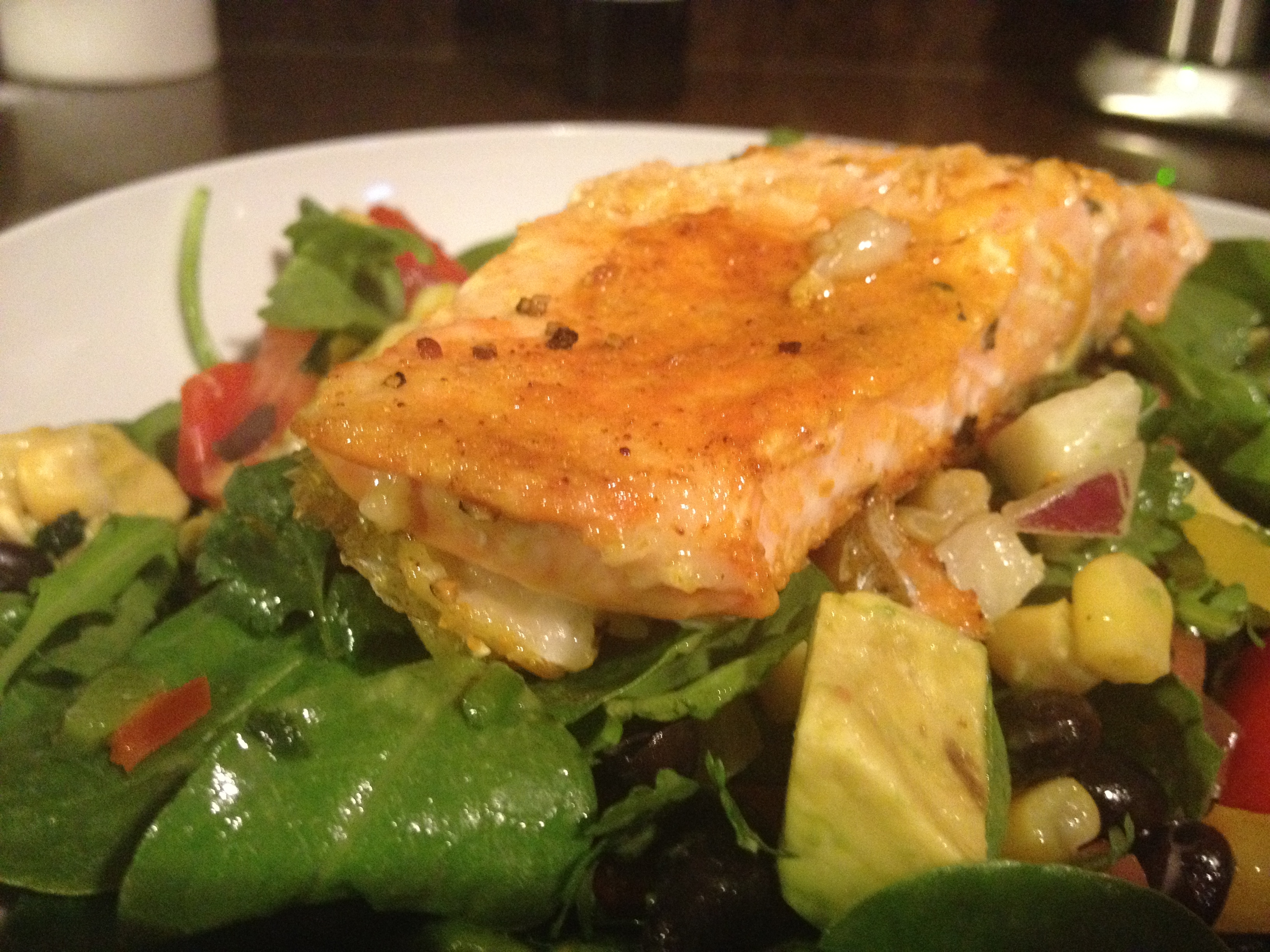
Due to the constant and unbearable heat, I have found myself craving green beans, salads, and cold fish. These cravings should, in theory, be a waistline blessing, yet I seem to be missing the benefits. Sigh. Moving on. On the bright side, this salad was delightful, healthy, fast, and fresh and I am tempted to make this a bi-weekly star in my summer food rotation.

Note: After briefly wrestling with the idea of making cilantro-jalapeno vinaigrette, I decided I just did not have the kitchen fortitude. It only takes a few minutes to make vinaigrette, but it had just been one of those days. I think that something along those lines would be fantastic with this salad. Instead, I used Girard’s Light Champagne Dressing, in my opinion is likely the best dressing ever bottled en masse. Use whatever you like or have on hand to make the meal more satisfactory and simple. Also, use the seasoning of your choice on your salmon; a simple salt and pepper season is fine. I used salt, pepper, a touch of adobo, red pepper flakes and lemon juice.

Summer Salmon Salad

Serves 1-2

One three to four ounce fillet of Salmon or Char, seasoned as desired
One cup Arugula
One and one half cup Spinach
Half cup Black-bean Corn Salsa (I left out the bell pepper)

One small tomato, seeded and diced
Five tablespoons jicama, diced
Freshly torn cilantro, to taste (I added a good handful)
One half avocado, diced
Dressing of choice

Sear the salmon to desired doneness in hot oil of choice (or bake it if you prefer). In a large bowl, combine all ingredients and mix well to incorporate all elements. Once the salmon is cooked, place gently onto the greens and drizzle with lemon juice and/or dressing.

Southwest Chicken Chile Stew

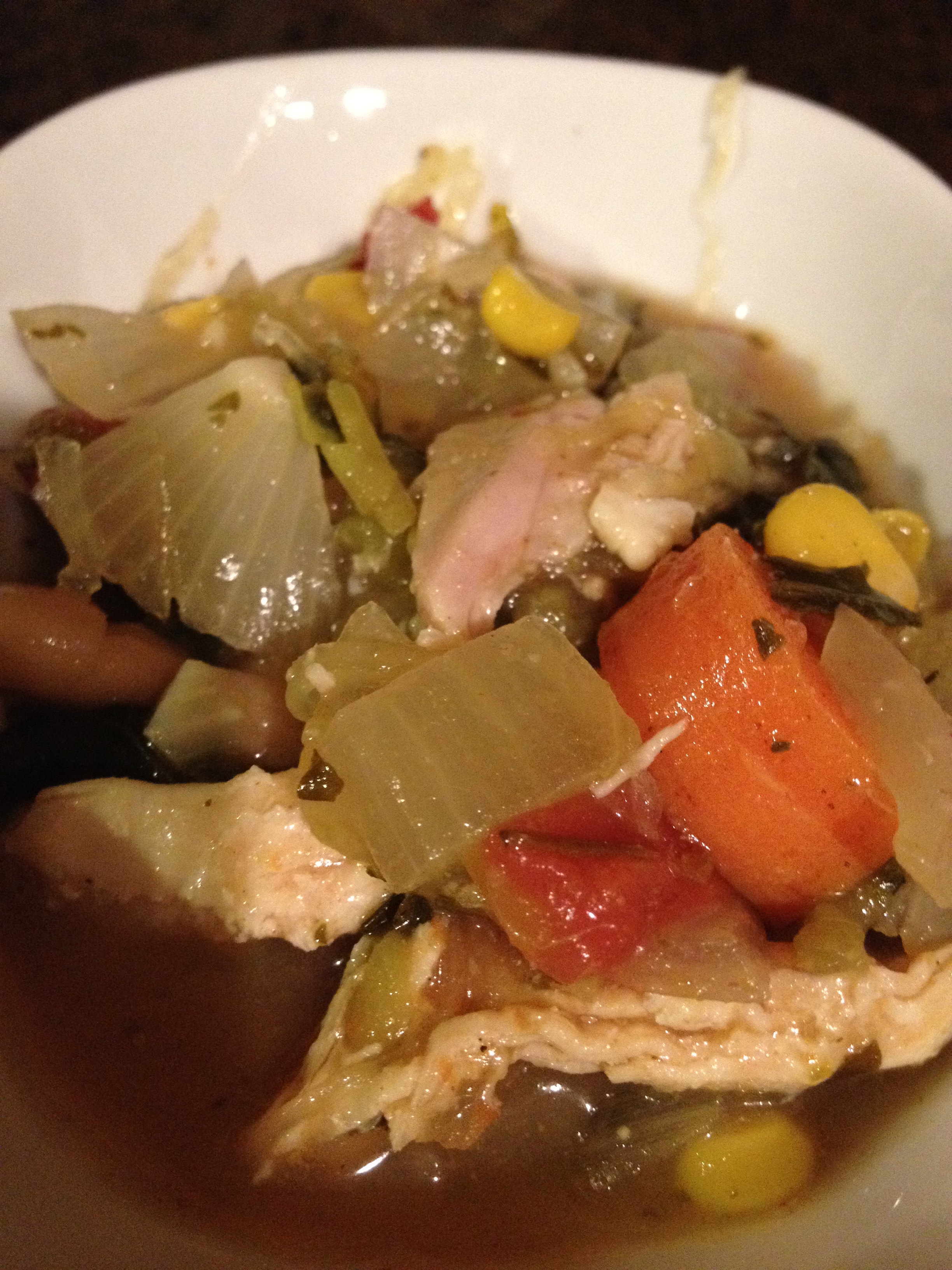
Accidents happen. Luckily, those accidents can sometimes turn out better than original intention. Take,  for example, this stew. It was an accident and the direct result of indecisiveness. It is also example of one of the [very] few times that indecisiveness has worked in my favor. Almost like the light bulb went off in the pan. To be fair, the ridiculous sale ($1.50/lb) that Whole Foods had on organic, bone-in chicken breast was also to blame as I bought enough to feed an army with virtually no free freezer space. I needed to make something that used a large amount of chicken and, preferably, something I could eat all week and freeze – most likely in someone else’s freezer –  if there was any remaining. I was torn between making a green chili chicken stew, which I love ( and also because my mom just passed off a Costco-sized jar of green chilis to me) and making something similar to Red Lentil and Veggie Soup (because it was so damn good the first go round). The result was that many of the same ingredients went into the pan with southwestern spices versus the Asian infusion that made the lentil soup delightful. That said, southwest spices are something to write home about as well so everyone wins. The addition of corn, spinach, and kale  (and my need to remove stuff from the freezer to accommodate the copious amounts of chicken I had purchased) also had a hand in steering me away from green chile chicken. However, I did use a hefty amount of green chilis in a futile attempt to put a dent in the ones given to me. In the end, the accidental stew turned out quite robust and flavorful. I hope did the Southwest proud.

Note: The reasons I did not use the same beans was because I only had those two cans and some Garbanzo beans on hand. Use whatever beans you like! Personally, I have a thing for kidney beans – but I do not discriminate. I am a bonafide bean freak. Yes I know, we all know about my obsession with beans…

Southwest Chicken Chile Stew

Serves four-six, plus leftovers

One can each Kidney Beans, Cannellini, and Garbanzo beans, drained and rinsed
One bag frozen corn (or canned)
Four bone in chicken breasts
Two cups frozen or fresh Kale
Three cups frozen or fresh Spinach
Six Carrots, cut into semi-thick slices
Two Onions, diced
Ten cloves garlic, minced
Two Bay leaves
Eight quarts chicken stock, preferably homemade
Two tablespoons Ground Cumin (adjust to taste)
Half-tablespoon Cayenne (adjust to taste)
Two tablespoons Ground Coriander
One tablespoon Oregano
Two cups fresh Cilantro
Two cups leftover Spaghetti Squash (optional)
One can Diced Tomatoes with Garlic
One cup (to one and a half) Chopped Green Chilis
Juice of one lemon

 *I did not add celery to my mirepoix which means I must not have had it on hand. Incorporate it if you like.

Season the chicken breasts with salt and pepper (additional spicing as desired) and brown in a good amount of  oil a large dutch oven. Once browned on each side, remove meat from pan and reserve. Add the mirepoix (carrots, onion, garlic) with a pinch of salt and sauté until onion becomes glassy. Add a cup of the chicken stock and deglaze the pot for a minute or so, then add remainder of chicken stock, the tomatoes, and the green chilis to the pot. Add the cumin, coriander, cayenne, bay leaves, oregano, a good couple pinches salt, and any additional seasoning that you desire. Return the chicken to the pot and simmer, covered, for up to four hours. Thirty minutes before you plan to remove the stew from heat, add in one cup of the fresh cilantro, beans, and the juice of half the lemon. Test for seasoning and adjust accordingly. Ten minutes before removing from heat add the spaghetti squash, frozen corn, kale and spinach. Add additional lemon juice as desired or necessary. Garnish with remaining cilantro when serving.

Mango-Jicama Slaw

Mango-Jicama Slaw

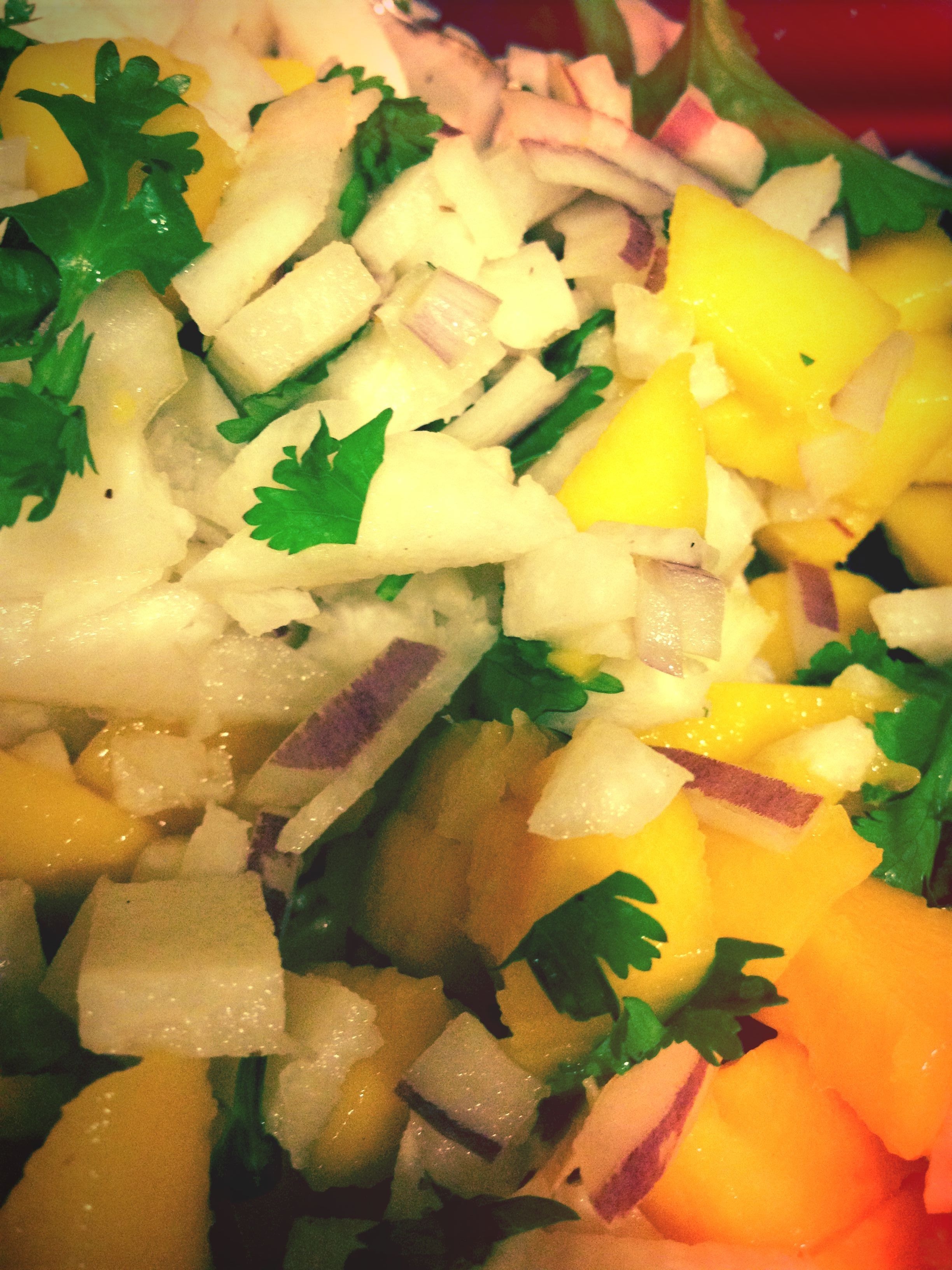
Jicama salads are just plain good. Jicama is an awesome texture element providing great crunch without having any overpowering flavor. This is just one of thousands of variations of Jicama salad and feel free to add whatever you fancy to it to meet your personal tastes. I also like it with carrots, radicchio, or avocado. I went for the simple version on Cinco de Mayo because I already was making guacamole, black bean corn salsa and pico. Clearly, that is just not enough food, so was forced to add this slaw to the mix (or maybe I desperately needed to use up some leftover mango and Jicama). This is great as a topping for tacos or enchiladas, grilled fish/chicken/meat, or simply eaten on its own. To me the crunchy Jicama is is the yin to the soft, sweet, juicy mango’s yang.

Mango-Jicama Slaw

Serves Four to Six

One to two Mangoes, diced
One half to one whole Jicama, sliced into thin straws or diced
Three tablespoons red onion or shallot, finely shaved or diced
Two cups Cilantro
Lemon Juice (from one lemon)
One-half tablespoon White Wine Vinegar
Pinch of Salt

Combine Mango, Onion, Cilantro and Jicama in a serving bowl. In a small bowl mix together salt, vinegar, and lemon juice. Pour over fruit mixture and stir well to combine.

Bacon-Wasabi Slaw

Bacon-Wasabi Slaw

Here is a fact about me: I hate mayonnaise. Whole-heartedly. I am not really a fan of anything with a mayo-like consistency, but I have been able to work yogurt and sour cream into recipes so long as they are fully incorporated and not eaten off a spoon and allowed to slither down my throat leaving my tongue all slimy feeling. But it goes further than that just hating the texture of mayonnaise – I hate the taste of it.  I don’t love the taste of yogurt or sour cream, but it is mild enough and generally adds to dishes that call for it. Mayonnaise just tastes wrong. Something about two dozen eggs just sitting on the shelf in a Hellman’s jar just waiting for its next unfortunate victim really funkifies that rancid stuff. I use replacements for nearly every mayo recipe: yogurt is the ingredient in my chicken salad; Kewpie – Japanese mayo which is far superior to American mayo (and even then only gets in my mouth when combined with an alarming amount of Sriracha or wasabi paste), and yogurt for slaw. The only mayo I tolerated was Central Market’s Organic Garlic Mayo and really that was only a tablespoon that had gone into some tuna salad and eventually got thrown away from non-use. So we get it, I hate mayonnaise.

This brings me to cole slaw. As a Texan, I appreciate BBQ. Albeit, not as much as some people but  I just can’t eat ten pounds of meat without needing to go to sleep for at least 12 hours and I am just too busy for that. What gets me is that as good as BBQ is, how did cole slaw make its way into the mix? I have not EVER been able to understand why ANYONE would have any part of the cole slaw abomination. It manages to combine two things I dislike most – mayo and vinegar all in one soggy mouthful. I get it – a slaw of some sort is delightful with BBQ to cut the heaviness of the meat…just leave cole out of it.

Recently, I was lucky enough to cook the sides for a baby shower for some dear friends. Their menu wish was BBQ. James – the male host – made the most mind-blowing, crack-like, succulent pork shoulder I have ever enjoyed (read gorged on) and some delicious brisket on his Texas-sized smoker. The thing is so big it will not fit in the garage or back yard and lives attached to his truck. Hey, everything is bigger in Texas. I was in charge of making the sides (which included crockpot beans, Hatch Green Chili Mac and Cheese) and decided that to feed a crowd BBQ without slaw was an injustice to BBQ. Thus, in an attempt to be traditionally non-traditional, Bacon-Wasabi slaw lightly dressed with Greek yogurt and bacon grease is born. I actually had a taco recently that boasted “Wasabi Bacon Asian Slaw” and, though it was good, it lacked the flavor punch and crunch I was looking for. So, using Boss Hogs tacos as my inspiration, I went about making up a recipe for “cole slaw” that I could stomach. The result was awesome and I stomached it everyday for a week.

This slaw will match any number of things (tacos, bed for grilled chicken, topping to beans, topping to beans and pork shoulder, side salad, etc.), budget-friendly, bacon filled, fresh and …most importantly…..MAYONNAISE FREE!!!The bacon grease really gives the dressing a smokey, God’s meat quality but feel free to skip this step or reduce the amount you include for health reasons. This recipe made a ton of slaw, which I enjoyed for about five days after the party.

Bacon-Wasabi Slaw

Slaw

Half Head Red Cabbage or Radicchio
Half Head Savoy Cabbage
Three Cups shredded carrots
Two red apples, julienned
One package thick-cut, applewood smoked bacon, baked until crispy and roughly chopped (grease reserved)
A couple pinches kosher salt
Black pepper to taste

Dressing

Juice of one lemon
One cup Greek yogurt
One half cup wasabi paste (feel free to add more to taste)
Reserved bacon juice (aka juice of God’s meat)

Combine all veggies, bacon pieces and fruit in a large bowl. In a smaller bowl combine all dressing ingredients and mix well. Mix dressing ingredients together well, taste and adjust as desired. Add dressing to veggies, with salt and pepper. Stir well and then taste. Adjust seasoning as necessary.

Sweet Potato Black Bean Soup

Black Bean and Sweet Potato Soup

If you read my blog, you are [likely] painfully aware of my bean obsession. I have also continued my soup obsession that found me sometime last November – both making soup and buying soup for lunch when I haven’t made it. Ergo, I stop by the Castle Hill Cafe which is connected to my gym (the most awesome gym ever!) on a daily basis. The reason that I stalk the soup peddlers at the cafe is because they have the best damn soup ever. Everyday it is different and everyday it puts other soup to shame. Other perks are that it is organically made using local ingredients and generally vegan and vegetarian friendly. This day I was somewhat under-thrilled to try the product as I am not the biggest fan of sweet potatoes – especially when they are sweet not savory, but I tried it to appease my bean craving. IT WAS INCREDIBLE. The flavor was complex and the soup was hearty and delicious. The girl who made the soup later was awesome enough to tell me her ingredients and I promptly took myself to the store to get sweet potatoes. I recreated it pretty well and ate it happily for days! This is an approximation of what I did as I made it almost two months ago and just now writing the recipe. Sorry for the lack of picture. I was too excited to eat the soup to bother with my phone!!

If Castle Hill Cafe ever makes a cookbook, an undertaking that I wish for daily, you guys will be the first to know (and I may actually follow the recipes to a tee – that is how wonderful they are)!

Black Bean and Sweet Potato Soup

Inspired by Castle Hill Café

Serves 4-8

Three cans black beans
Three large sweet potatoes
One white onion
Eight garlic cloves
Three or Four Celery Ribs
Seven Carrots (I like a lot of carrot so I used a lot – adjust as necessary)
Two Turkish Bay Leaves
One Tablespoon Ground Cumin
Half tablespoon Ground Coriander
Two Tablespoons Red Pepper Flakes
Half Teaspoon Cinnamon
Good Pinch of Salt
One tablespoon black pepper

Clean and dry sweet potatoes. Toss potatoes with a bit of olive oil, cumin, salt, and lime juice. Roast in oven for 45 minutes and remove when soft. Meanwhile, saute onions, garlic, celery and carrots in a couple of tablespoons of olive oil until glassy. Add black beans, veggie stock, bay leaves, cumin, coriander, red pepper flakes, cinnamon, salt and pepper and let simmer until the potatoes are finished cooking. Remove the soft potatoes and mash to desired consistency (I left some chunks because I wanted some good, thick pieces of sweet potato). Add to the simmering stew and mix well to incorporate. You can emulsify or blend the soup, mash it with a masher, or leave as is. Top with fresh herbs of choice (optional – I topped with cilantro) and serve with a salad for a healthy vegan meal.